The Indispensable Role of Zinc Coatings in Steel Protection


This article has been supplied.
Infrastructure development and reinforced concrete, encompassing bridges, buildings, pipelines, and power transmission towers, relies heavily on steel due to its strength and versatility. However, steel's vulnerability to corrosion poses a significant challenge, threatening the operational life and safety of these critical structures. To fight this, zinc coatings have emerged as a vital protective measure, offering a double defence mechanism: both a physical barrier and cathodic protection.
A. The dangers of Steel Corrosion
Steel, when exposed to moisture/water and oxygen, undergoes corrosion, commonly known as rusting. This process weakens the material, leading to structural failures and costly repairs. If infrastructure is exposed to harsh environments, such as in marine or industrial locations, the rate of corrosion accelerates, necessitating effective protective strategies. This is particularly so in mining and underground environments.
B. Zinc Coatings: A Double Defense
Zinc, when applied to steel surfaces e.g. by hot dip galvanizing or thermal spraying, provides a comprehensive corrosion protection system based on two key mechanisms:
1. Physical Barrier Protection:
- Isolation from corrosive environments: Zinc coatings create a physical barrier between the steel substrate and the corrosive environment. This barrier prevents direct contact with moisture, oxygen, and other aggressive species such as chlorides, effectively hindering the initiation of the corrosion process.
- Adherence and durability: Zinc coatings, particularly those applied through hot dip galvanizing, form a strong metallurgical bond with the steel substrate. This bond ensures excellent adhesion, preventing the coating from peeling or flaking, even through mechanical damage, impact or thermal expansion.
- Impermeability: The dense and relatively impermeable nature of zinc coatings minimizes the penetration of corrosive agents. This characteristic is particularly important in environments with high humidity or corrosive agents; however if there are chlorides present then an organic must be applied to galvanizing to give what is called a Duplex coating system.
- Sacrificial layer: Zinc after galvanizing acts as a sacrificial layer, meaning it will corrode in preference to the steel. This provides a level of protection even when the coating is not entirely intact.
2. Cathodic Protection:
- Electrochemical performance: Zinc is more electrochemically active than steel, meaning it has a greater tendency to lose electrons. When zinc and steel are in contact in an electrolyte (such as mine water), zinc acts as the anode, and steel acts as the cathode. Zinc is sacrificed and not the steel.
- Preferential corrosion: In this electrochemical cell, zinc corrodes preferentially, while the steel remains protected. This process, known as cathodic protection, effectively sacrifices the zinc to save the steel.
- Galvanic protection: Even if a scratch or cut exposes the underlying steel, the surrounding zinc coating continues to provide corrosion protection.
- Long-Range protection: Cathodic protection can extend beyond the immediate area of the zinc coating, providing protection to areas where the coating may be damaged or inaccessible. This "throwing power" is a crucial advantage in protecting complex structures.
C. Methods of Zinc Coating Application:
Several methods are employed to apply zinc coatings to steel, each with its own advantages and application:
- Hot-Dip Galvanizing: This method involves immersing steel components in a molten zinc bath at 450 oC, resulting in a thick, durable coating with excellent adhesion. It is widely used for structural steel, rebar, fasteners, and other large steel components.
- Zinc Thermal Spray: This method involves spraying molten zinc onto a prepared steel surface using a thermal spray gun. It is suitable for large structures or on-site applications where hot-dip galvanizing is impractical. Often zinc and aluminium are used in concert to achieve a very corrosion resistant coating.
- Zinc-Rich Paints: These paints contain a high concentration of zinc dust or zinc flake, providing both barrier and cathodic protection. They are commonly used for touch-up repairs and for protecting structures in aggressive environments and where it is not possible to galvanize fixed steel structures. It can also be painted onto reinforced concrete and act as an anode in cathodic protection of rebar.
D. What are the benefits of Zinc coatings on Steel in mining infrastructure?
- Extended Service Life: Zinc coatings significantly extend the service life of steel structures, reducing maintenance costs and minimizing downtime.
- Enhanced Durability: Zinc coated steel, particularly batch hot dip galvanized steel, is highly resistant to abrasion, impact, and other forms of mechanical damage.
- Reduced Maintenance: The long lasting protection provided by zinc coatings minimizes the need for frequent maintenance, recoating and repair.
- Cost-Effectiveness: Although the initial cost of zinc coating may be higher than other protective measures, its long-term durability and reduced maintenance requirements make it a cost-effective solution.
- Environmental Sustainability: Zinc is a naturally occurring element and is recyclable. The long service life of zinc-coated steel also contributes to sustainability by reducing the need for frequent replacements. Galvanized steel can be recycled.
- Safety Improvement: By preventing structural failures caused by corrosion, zinc coatings enhance the safety of infrastructure.
E. Where would zinc coatings be applied on Infrastructure ?
Zinc coatings are widely used in various infrastructure applications, including:
- Bridges and road works concrete: Galvanized steel is used for bridge beams, guardrails, reinforced steel in concrete and other structural components.
- Buildings and Structures: Continuously galvanized steel sheet is used for roofing, cladding, and hot dip galvanized steel for structural steel.
- Pipelines & Storage Tanks: Zinc coatings protect pipelines and storage tanks from corrosion, ensuring the safe transport and storage of liquids and gases.
- NB Care must be taken not to expose zinc coatings to low pH fluids ( acids ) or liquid alkali ( high pH) as they will lead to premature zinc consumption- in these applications the galvanized or zinc coated steel should be given a robust organic coating to create a Duplex coating system,
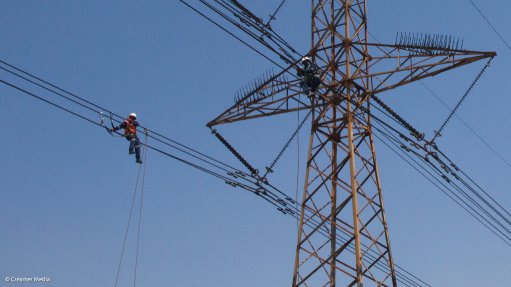
- Power Transmission Towers: Galvanized steel is used for power transmission pylons, providing long term protection in harsh environments such as along the South African West coast and the East Coast of Southern Africa
- Cell Phone & Microwave Towers: Galvanized steel is used for telecommunications towers, ensuring reliable communication infrastructure which does not rust and collapse.
- Water Treatment and Sewage Plants: Galvanized steel is used in water treatment and sewage plants, providing resistance to corrosive chemicals and wastewater. This is a key sector for galvanized steel and zinc rich coatings in Southern Africa.
The LAST WORD on zinc anti- corrosion coatings
Zinc coatings play a crucial role in protecting steel infrastructure from corrosion, ensuring its long life, safety, and reliability. By providing a physical barrier and cathodic protection, zinc coatings offer a comprehensive defense mechanism that significantly extends the service life of steel structures. As infrastructure development continues to expand in South Africa and elsewhere in Africa, the importance of zinc coatings in safeguarding these critical assets will increase. The understanding and proper application of zinc coatings are essential for building a durable and sustainable infrastructure for the future.
IZA
Article Enquiry
Email Article
Save Article
Feedback
To advertise email advertising@creamermedia.co.za or click here
Research Reports

Projects

Latest Multimedia

Latest News

Showroom

Astore Keymak is one of South Africa’s leading suppliers of high-quality Thermoplastic Pipeline Systems, with branches in the major provinces.
VISIT SHOWROOM
Supplier & Distributor of the Widest Range of Accurate & Easy-to-Use Alcohol Breathalysers
VISIT SHOWROOM


Announcements
What's On
Subscribe to improve your user experience...
Option 1 (equivalent of R125 a month):
Receive a weekly copy of Creamer Media's Engineering News & Mining Weekly magazine
(print copy for those in South Africa and e-magazine for those outside of South Africa)
Receive daily email newsletters
Access to full search results
Access archive of magazine back copies
Access to Projects in Progress
Access to ONE Research Report of your choice in PDF format
Option 2 (equivalent of R375 a month):
All benefits from Option 1
PLUS
Access to Creamer Media's Research Channel Africa for ALL Research Reports, in PDF format, on various industrial and mining sectors
including Electricity; Water; Energy Transition; Hydrogen; Roads, Rail and Ports; Coal; Gold; Platinum; Battery Metals; etc.
Already a subscriber?
Forgotten your password?
Receive weekly copy of Creamer Media's Engineering News & Mining Weekly magazine (print copy for those in South Africa and e-magazine for those outside of South Africa)
➕
Recieve daily email newsletters
➕
Access to full search results
➕
Access archive of magazine back copies
➕
Access to Projects in Progress
➕
Access to ONE Research Report of your choice in PDF format
RESEARCH CHANNEL AFRICA
R4500 (equivalent of R375 a month)
SUBSCRIBEAll benefits from Option 1
➕
Access to Creamer Media's Research Channel Africa for ALL Research Reports on various industrial and mining sectors, in PDF format, including on:
Electricity
➕
Water
➕
Energy Transition
➕
Hydrogen
➕
Roads, Rail and Ports
➕
Coal
➕
Gold
➕
Platinum
➕
Battery Metals
➕
etc.
Receive all benefits from Option 1 or Option 2 delivered to numerous people at your company
➕
Multiple User names and Passwords for simultaneous log-ins
➕
Intranet integration access to all in your organisation